Problem
Why Topic-Controlled Summarisation (TCS)?
Academic literature keeps growing at a pace no learner can fully keep up with, making it impractical to read every paper in full. What learners usually need isn't the whole document but the specific topic relevant to their question. Generic summarisation falls short here — it gives a broad overview rather than focusing on that topic. Topic-controlled summarisation (TCS) addresses this by targeting a chosen topic directly, reducing the cognitive load of digging through irrelevant content.
Team
Team-member

Nathikan Yodthap
Researcher
KKU
Thanapong Intharah
Advisor
KKU
Sahan Bulathwela
Co-Advisor
UCLAbstract
Abstract
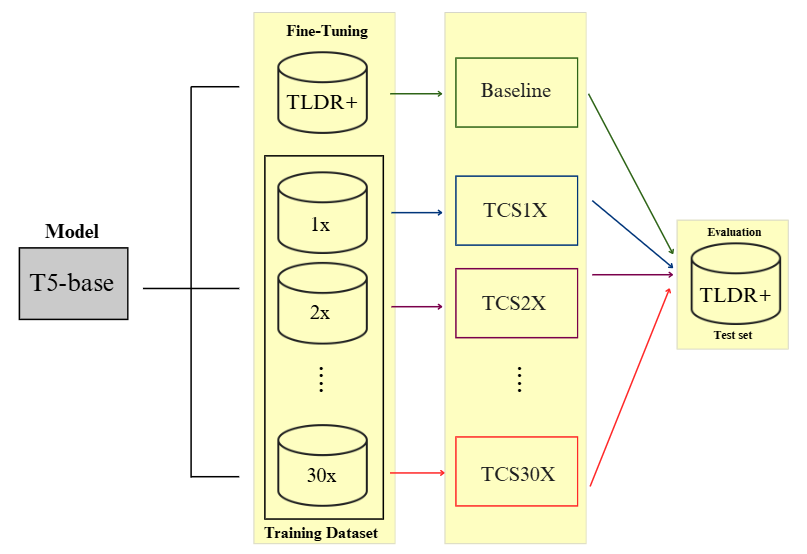
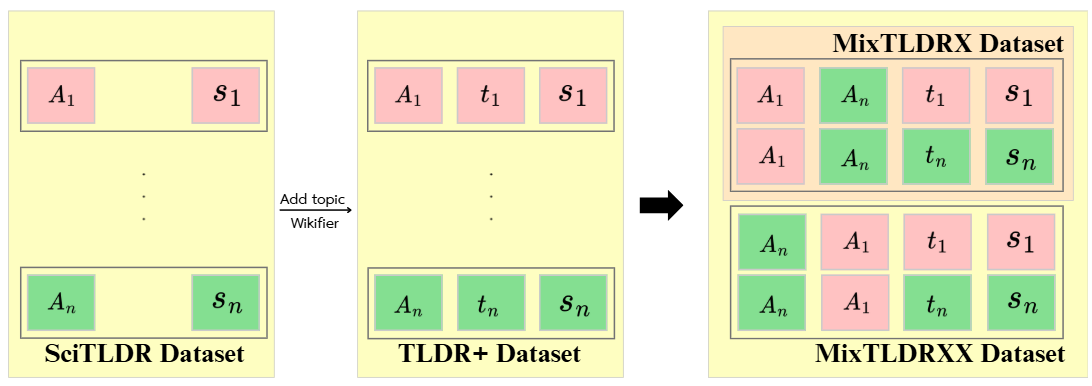
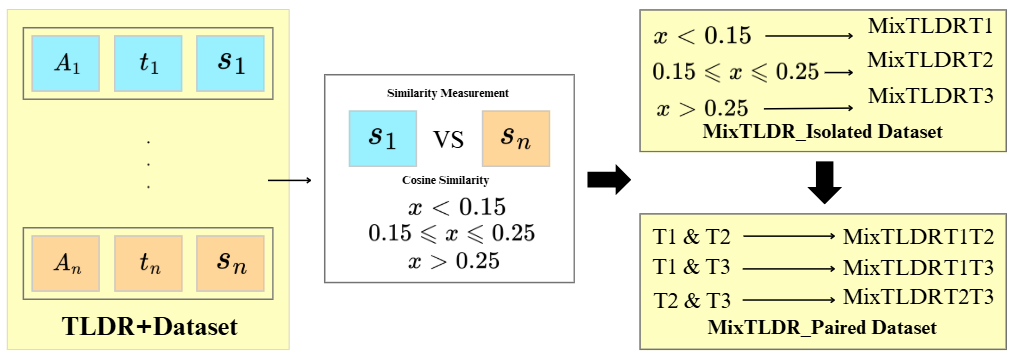
Topic-controlled summarisation enables users to generate summaries focused on specific aspects of source documents. This paper investigates a data augmentation strategy for training small language models (sLMs) to perform topic-controlled summarisation. We propose a pairwise data augmentation method that combines contexts from different documents to create contrastive training examples, enabling models to learn the relationship between topics and summaries more effectively. Using the SciTLDR dataset enriched with Wikipedia-derived topics, we systematically evaluate how augmentation scale affects model performance. Results show consistent improvements in win rate and semantic alignment as the augmentation scale increases, while the amount of real training data remains fixed. Consequently, a T5-base model trained with our augmentation approach achieves competitive performance relative to larger models, despite using significantly fewer parameters and substantially fewer real training examples.
Method
Method Overview
Resources
Main content
Code
Implementation details, training scripts, and released checkpoints will be published here.
Coming soonPublication
AIED 2026 · Springer
Read the full paper in the AIED 2026 proceedings, published by Springer.
Read the paper →